Ingredients · 6 min read
L-theanine and caffeine: what the research shows
What the trials tested, what they found, and whether there’s an ideal ratio.
By the Romeé teamUpdated 4 sources
On this page
The quick version
- L-theanine is an amino acid found naturally in tea leaves. Shade-grown tea, like matcha, has more of it.
- In small randomized trials, caffeine plus L-theanine improved some measures of attention and alertness within an hour or two.
- A 2014 meta-analysis of 11 trials rated the effects moderate and short-term, and found the caffeine dose seemed to matter more.
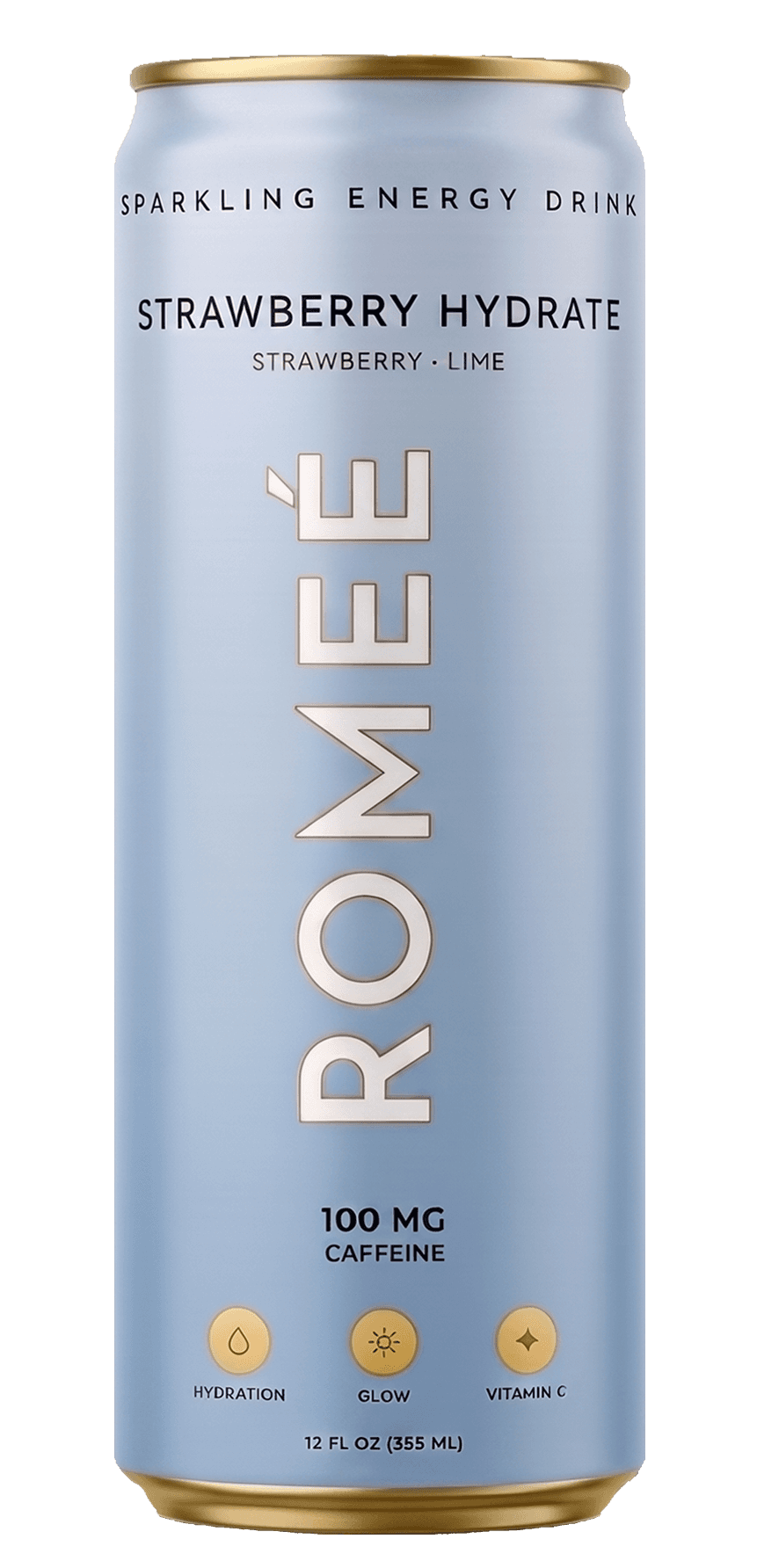
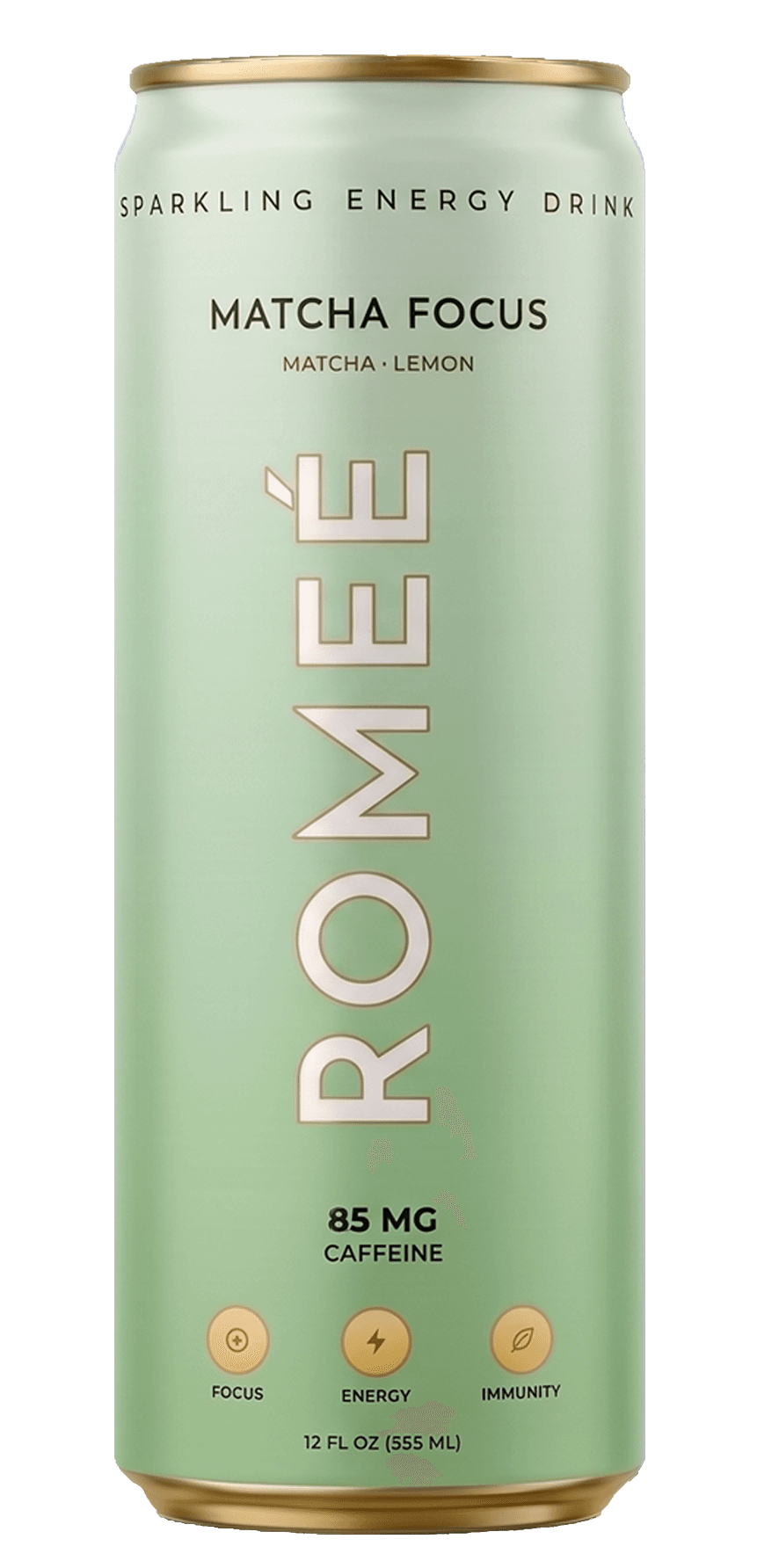
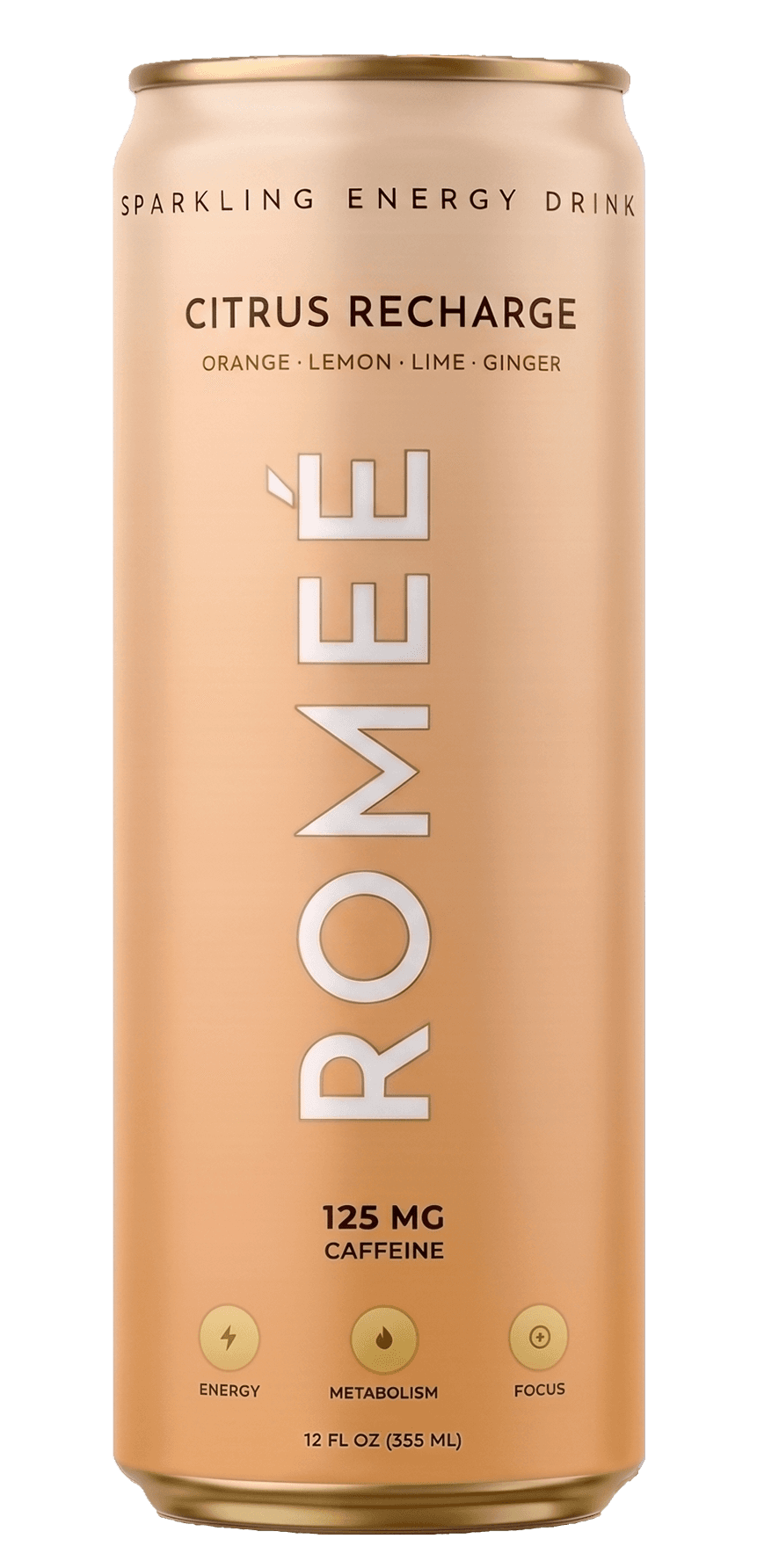
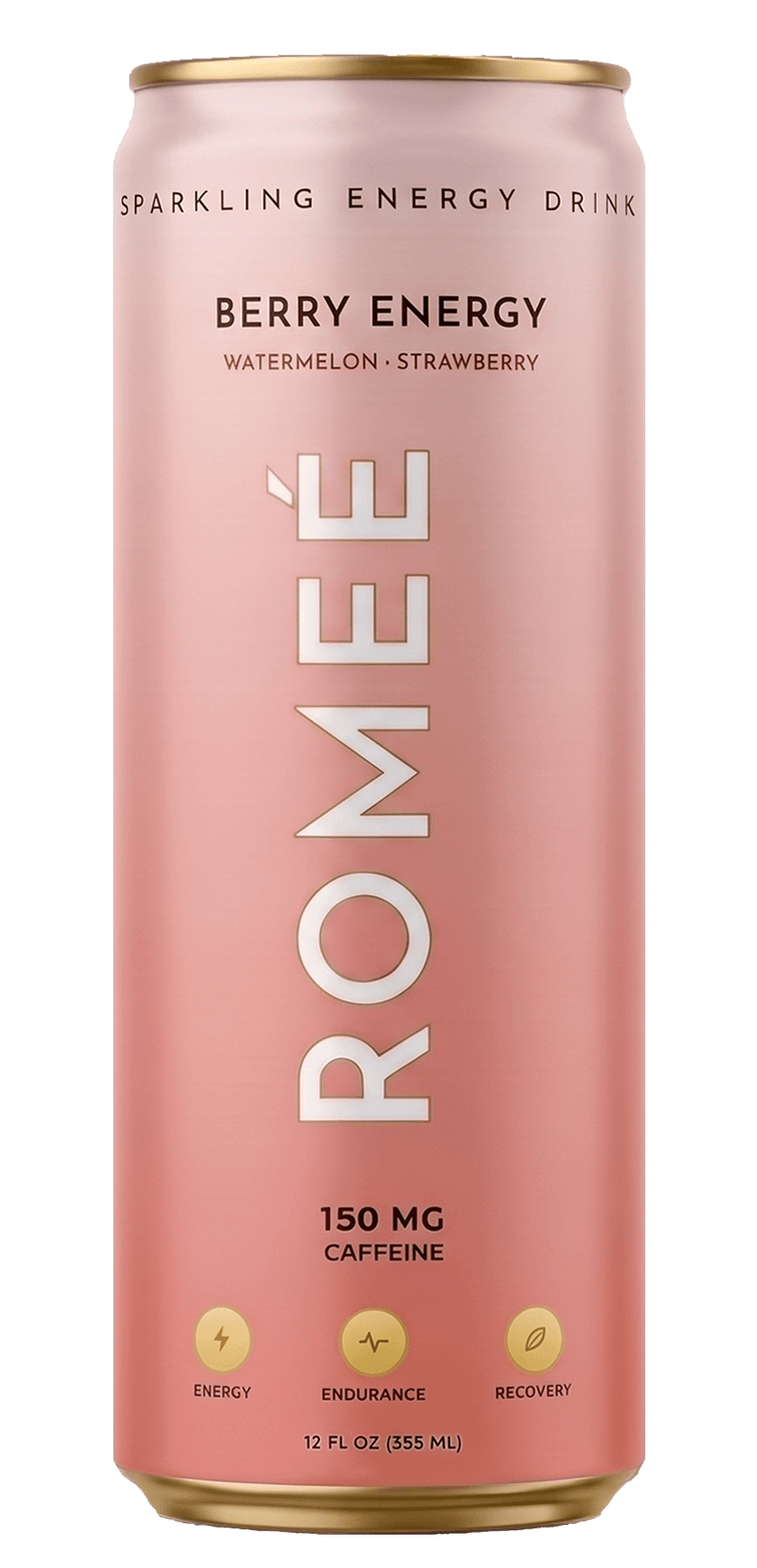
- Matcha Focus, Citrus Recharge and Berry Energy contain L-theanine. Strawberry Hydrate doesn’t.
The short answer
In small, controlled studies, people given caffeine plus L-theanine did better on some attention tasks than people given a placebo. A 2014 review that pooled 11 randomized trials found moderate improvements in alertness and attention switching within the first two hours. The same review found the caffeine dose seemed to matter more than the L-theanine dose.[1]
The trials behind that finding were small and short-term, so it helps to look at each one.
What is L-theanine?
L-theanine is an amino acid found naturally in tea leaves. Tea plants grown in shade, like those used for matcha, build up more of it, along with more caffeine.[2] One analysis cited in a 2020 review found as much as 44.65 mg of L-theanine per gram of matcha.[2]
What the studies found
Owen and colleagues, 2008
Twenty-seven healthy adults took 50 mg of caffeine, the same caffeine with 100 mg of L-theanine, or a placebo, on separate days. An hour later, the combination improved both speed and accuracy on an attention-switching task. It also made people less susceptible to distracting information during a memory task, at 60 and 90 minutes.[3]
Haskell and colleagues, 2008
This double-blind trial tested 250 mg of L-theanine alone, 150 mg of caffeine alone, and the two together. The combination improved reaction times, working memory speed and accuracy on several tasks. People also rated themselves less tired, more alert, and lower on headache.[4]
L-theanine on its own didn’t help. It raised headache ratings and lowered accuracy on a mental arithmetic task.[4]
Camfield and colleagues, 2014
This systematic review and meta-analysis pooled 11 randomized controlled trials of tea compounds. Caffeine and L-theanine together produced moderate improvements in alertness and attention switching within two hours. The authors noted that the effects appeared to depend more on the caffeine dose than on the L-theanine dose.[1]
Is there an ideal L-theanine to caffeine ratio?
Not an established one. Owen’s study used 2 parts L-theanine to 1 part caffeine. Haskell’s used 250 mg to 150 mg, closer to 1.7 to 1.[3, 4] Since the pooled review found the caffeine dose mattered more, chasing a precise ratio is probably less useful than knowing your caffeine number.[1]
L-theanine in Romeé
| Flavor | L-theanine source on the label | Caffeine |
|---|---|---|
| Matcha Focus | L-theanine, plus organic matcha | 85 mg |
| Citrus Recharge | Organic green tea extract | 125 mg |
| Berry Energy | Organic green tea extract | 150 mg |
| Strawberry Hydrate | None | 100 mg |
What this means for you
If the pairing interests you, your caffeine dose is still the most useful number, since that’s what the research tied most closely to the effect. Keep it within the guidance in our caffeine guide, and notice how you feel.
In the Haskell study, the benefits showed up with the combination. L-theanine alone didn’t produce them. If you’re weighing matcha against coffee for exactly this reason, we compared the two in matcha vs coffee.
From Romeé
L-theanine is in Matcha Focus, Citrus Recharge and Berry Energy. The caffeine is printed on every can.
Pre-order now. Orders ship once our first production run is in hand, ahead of our Fall 2026 launch.
Frequently asked questions
What does L-theanine do with caffeine?
In small controlled trials, people given caffeine plus L-theanine did better on some attention tasks, like switching between tasks, than people given a placebo. A 2014 review of 11 trials found moderate, short-term effects on alertness and attention.
What is the best L-theanine to caffeine ratio?
There isn’t an established one. The trials we cite used roughly 1.7 to 2 parts L-theanine per part caffeine, and a 2014 review found the caffeine dose appeared to matter more than the L-theanine dose.
Does matcha have L-theanine?
Yes. Matcha comes from tea plants grown in shade, which raises the leaf’s L-theanine and caffeine. One analysis cited in a 2020 review found up to 44.65 mg of L-theanine per gram of matcha.
Which Romeé flavors contain L-theanine?
Matcha Focus, Citrus Recharge and Berry Energy. Strawberry Hydrate doesn’t contain L-theanine.
Does L-theanine work on its own?
In one 2008 trial, 250 mg of L-theanine on its own raised headache ratings and lowered accuracy on a mental arithmetic task. The improvements in that study showed up when it was combined with caffeine.
Sources
- 1.Camfield DA, Stough C, Farrimond J, Scholey AB. Acute effects of tea constituents L-theanine, caffeine, and epigallocatechin gallate on cognitive function and mood: a systematic review and meta-analysis. Nutrition Reviews. 2014;72(8):507-522. Review
- 2.Kochman J, Jakubczyk K, Antoniewicz J, Mruk H, Janda K. Health Benefits and Chemical Composition of Matcha Green Tea: A Review. Molecules. 2020;26(1):85. Review
- 3.Owen GN, Parnell H, De Bruin EA, Rycroft JA. The combined effects of L-theanine and caffeine on cognitive performance and mood. Nutritional Neuroscience. 2008;11(4):193-198. Study
- 4.Haskell CF, Kennedy DO, Milne AL, Wesnes KA, Scholey AB. The effects of L-theanine, caffeine and their combination on cognition and mood. Biological Psychology. 2008;77(2):113-122. Study
This article is for general education. It is not medical advice. If you are pregnant, nursing, under 18, sensitive to caffeine, or managing a health condition, talk to your doctor.