Caffeine · 9 min read
How much caffeine is too much?
The regulators’ numbers, a chart of what’s in your cup, how long caffeine lasts, and a calculator to add up your day.
By the Romeé teamUpdated 5 sources
On this page
The quick version
- For most healthy adults, the FDA cites up to 400 mg of caffeine a day as an amount not generally associated with negative effects. EFSA, Europe’s food safety agency, uses the same figure.
- EFSA adds two useful markers: single doses up to 200 mg raise no safety concerns for healthy adults, and 100 mg close to bedtime may affect sleep.
- During pregnancy and breastfeeding, EFSA’s figure is up to 200 mg a day. The FDA says medical experts advise against energy drinks for children and teens.
- Caffeine’s half-life averages about 5 hours but ranges from 1.5 to 9.5, so an afternoon can may still be with you at bedtime.
The short answer
For most healthy adults, up to 400 mg of caffeine a day. The FDA cites that amount as not generally associated with negative effects, and puts it at about two to three 12-ounce cups of coffee.[1] The European Food Safety Authority, known as EFSA, reached the same figure in its 2015 safety review.[2]
That 400 mg is an upper limit for your whole day, from every source. Your own limit may be lower. The FDA notes wide variation in how sensitive people are to caffeine and how fast they clear it.[1]
The numbers regulators use
| Who or when | Guidance | Source |
|---|---|---|
| Healthy adults, per day | Up to 400 mg | FDA, EFSA |
| Healthy adults, at one time | Up to 200 mg raises no safety concerns, including less than 2 hours before exercise | EFSA |
| Close to bedtime | 100 mg may affect sleep in some adults | EFSA |
| Pregnant or breastfeeding | Up to 200 mg a day. The FDA recommends talking with your provider | EFSA, FDA |
| Children and teens | Medical experts advise against energy drinks. EFSA’s level for children and adolescents is 3 mg per kg of body weight a day | FDA, EFSA |
| Toxic range | Around 1,200 mg taken quickly, less than half a teaspoon of pure caffeine | FDA |
That last row is why pure caffeine powder is so risky. The FDA says pure and highly concentrated caffeine products can have serious health consequences, including death.[1]
Energy drink caffeine chart
This chart compares common drinks. Figures are per 12 ounces unless noted.
| Drink | Serving | Caffeine | Source |
|---|---|---|---|
| Decaf coffee | 8 oz | 2 to 15 mg | FDA |
| Caffeinated soda | 12 oz | 23 to 83 mg | FDA |
| Green tea | 12 oz | 37 mg | FDA |
| Black tea | 12 oz | 71 mg | FDA |
| Espresso | 60 ml (about 2 oz) | 80 mg | EFSA |
| Energy drinks | 12 oz | 41 to 246 mg | FDA |
| Brewed coffee | 12 oz | 113 to 247 mg | FDA |
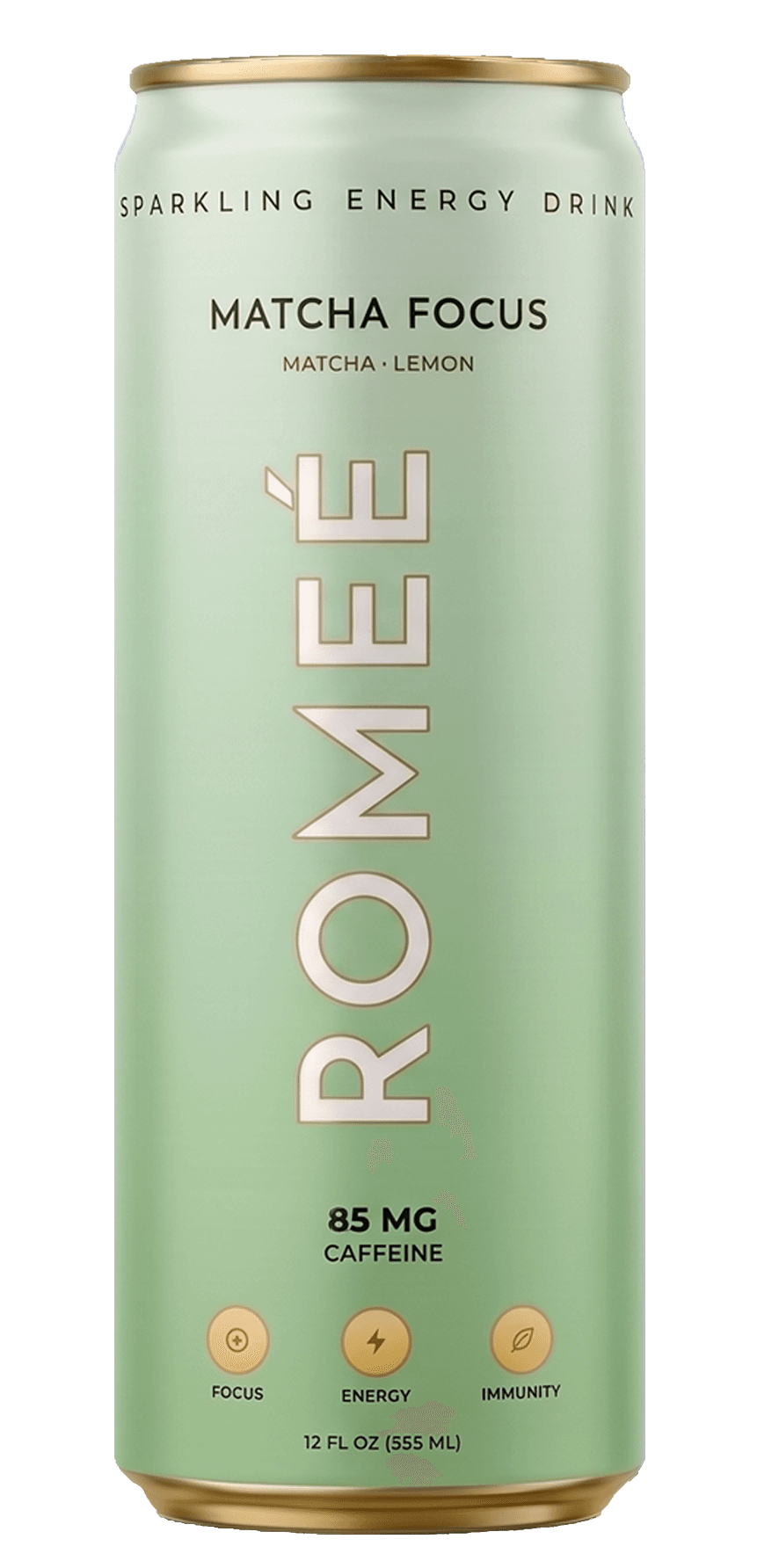
| Romeé Matcha Focus | 12 oz can | 85 mg | Our label |
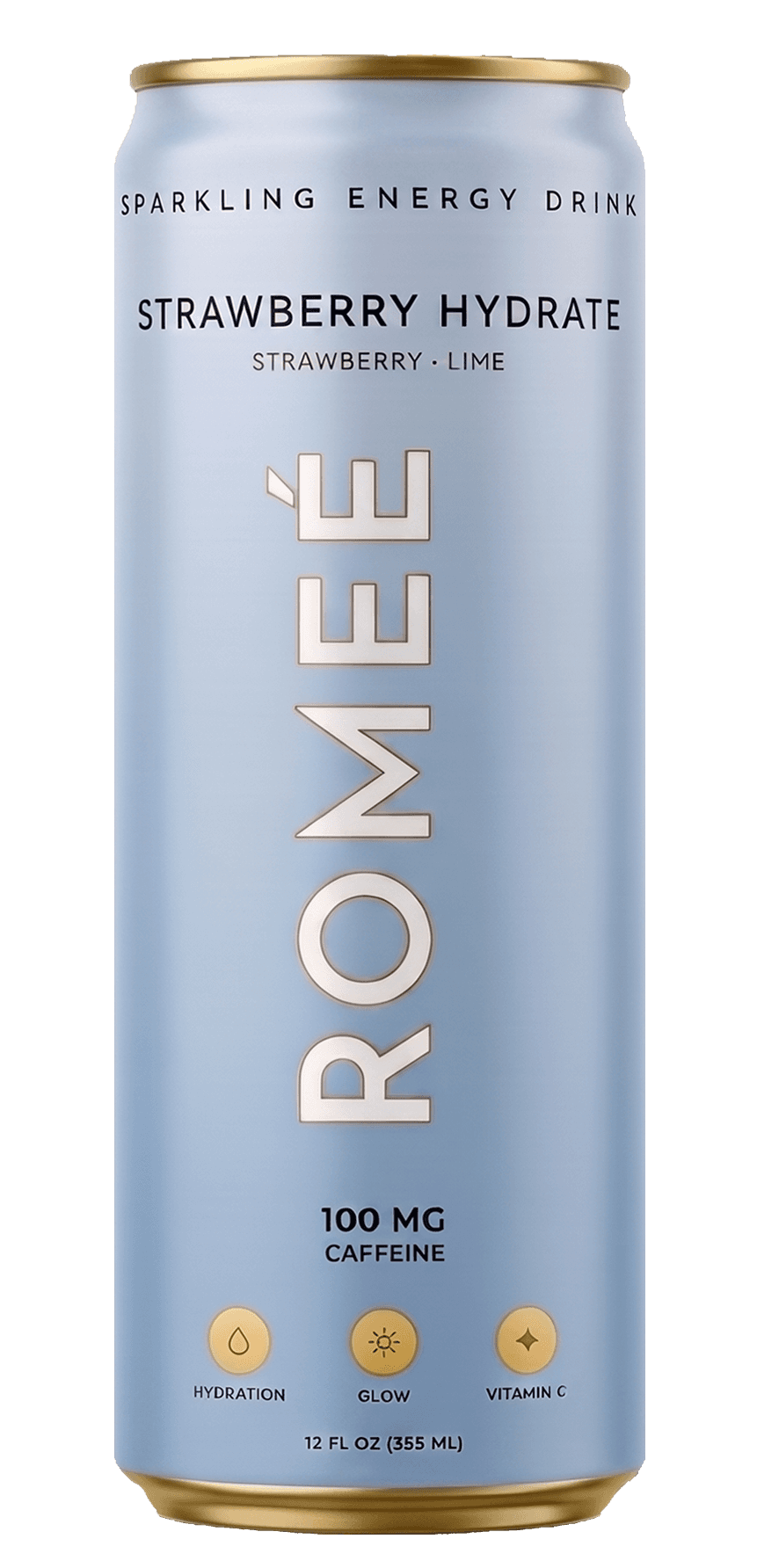
| Romeé Strawberry Hydrate | 12 oz can | 100 mg | Our label |
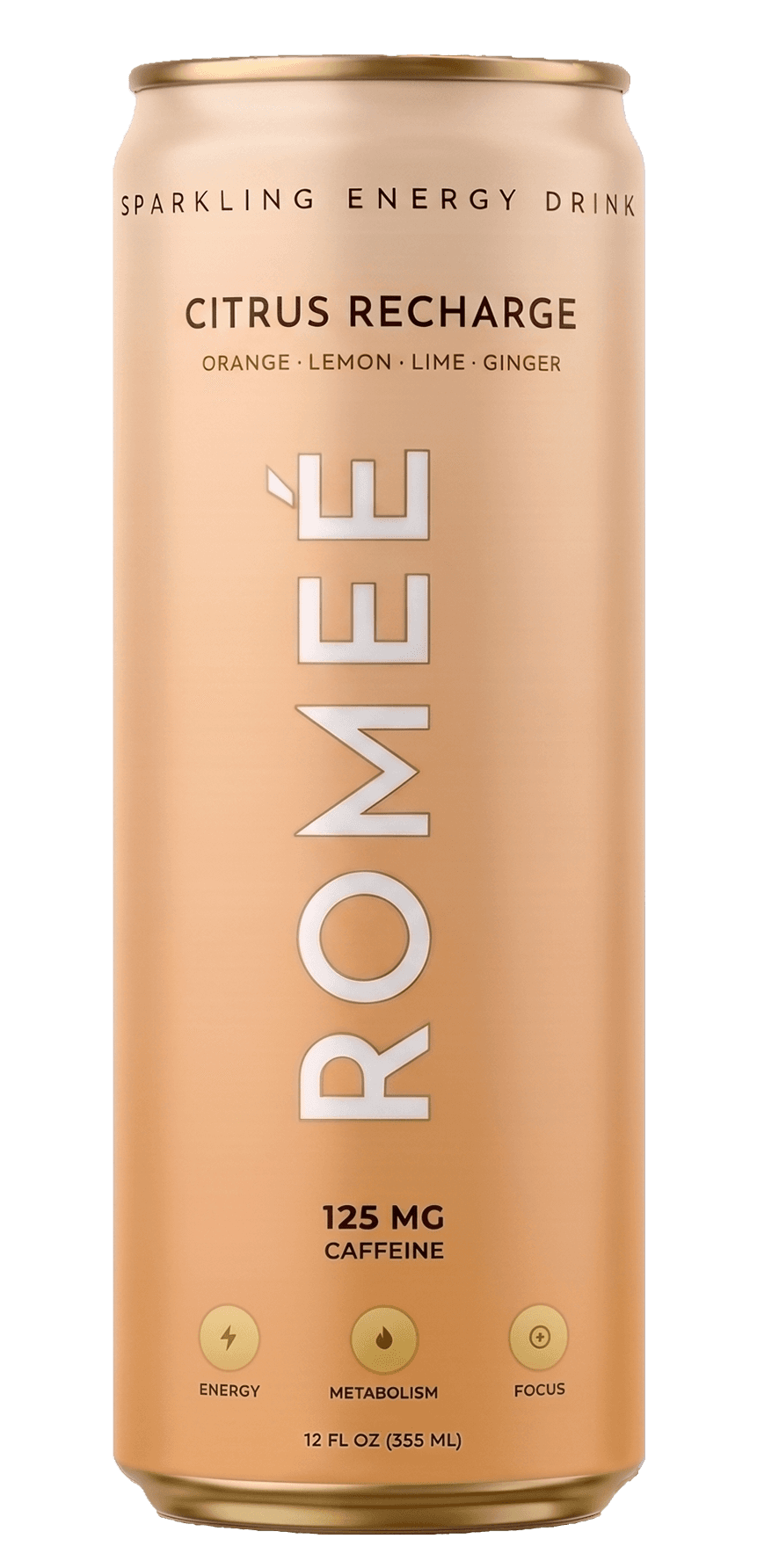
| Romeé Citrus Recharge | 12 oz can | 125 mg | Our label |
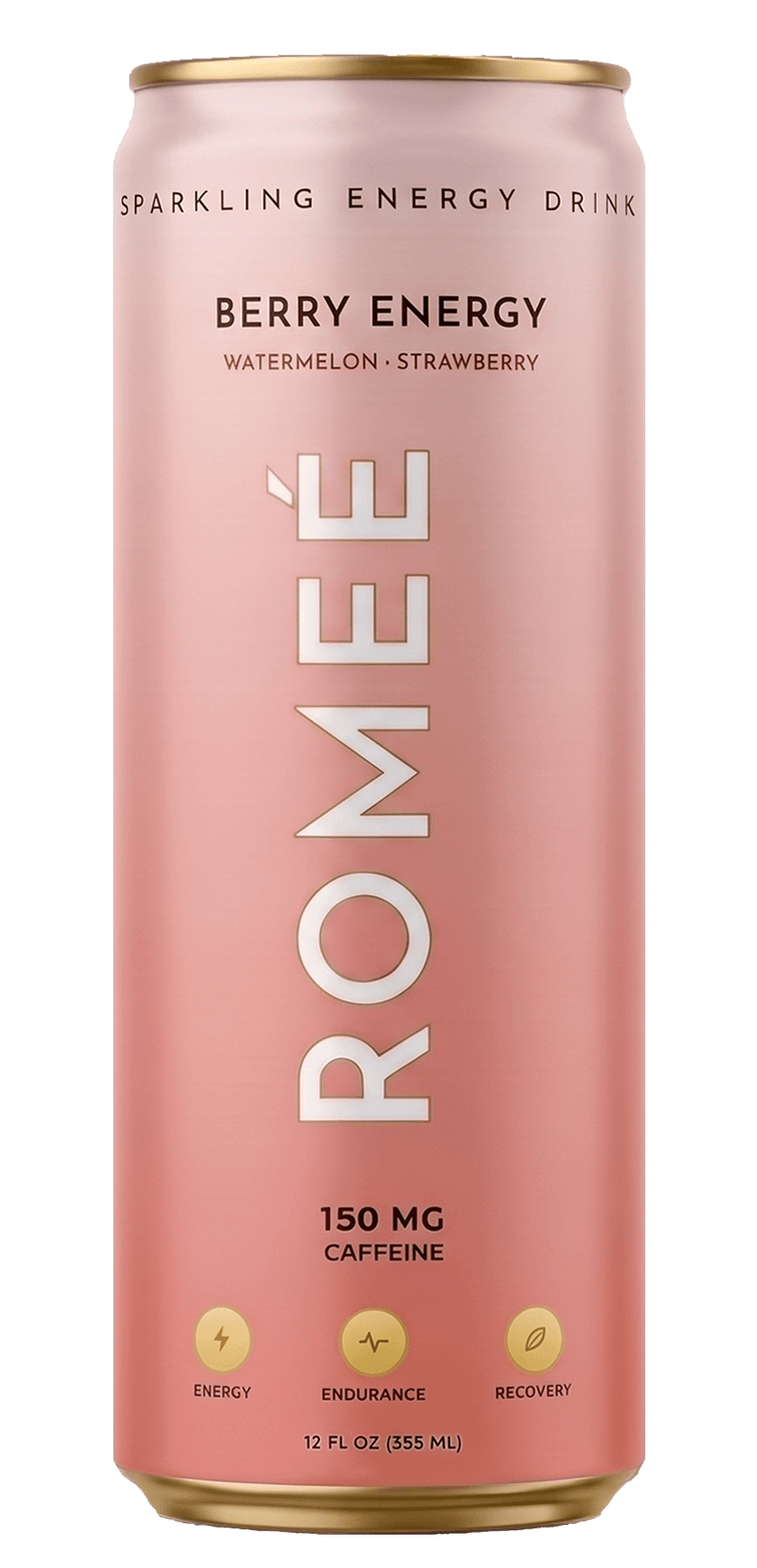
| Romeé Berry Energy | 12 oz can | 150 mg | Our label |
Two things stand out. Coffee varies a lot: a 12-ounce cup can hold anywhere from 113 to 247 mg. And energy drinks span a sixfold range, from 41 to 246 mg, so the milligrams on the label matter more than the category.
Every Romeé can sits below EFSA’s 200 mg single-dose marker. Berry Energy, our strongest at 150 mg, is three-quarters of it.
How many energy drinks a day is too many?
It depends on the milligrams in each can and everything else you drink that day. On its own, each Romeé flavor uses this much of the 400 mg daily figure:
| Can | Caffeine | Share of 400 mg |
|---|---|---|
| Matcha Focus | 85 mg | 21% |
| Strawberry Hydrate | 100 mg | 25% |
| Citrus Recharge | 125 mg | 31% |
| Berry Energy | 150 mg | 38% |
Now add a 12-ounce coffee at 113 to 247 mg, and the room left shrinks fast. Most people get caffeine from more than one drink, which is why the calculator below adds up your whole day.
And remember that 400 mg is for healthy adults who aren’t pregnant. If that isn’t you, your number is lower, and your doctor is the right person to set it.
Add up your day
Tap in what you drink on a typical day. The figures come from the FDA and EFSA numbers above, so a strong coffee shows up as a range.
Caffeine calculator
What does your day add up to?
Brewed coffee
12 oz · 113 to 247 mg · FDA
0Espresso
60 ml shot · 80 mg · EFSA
0Black tea
12 oz · 71 mg · FDA
0Green tea
12 oz · 37 mg · FDA
0Caffeinated soda
12 oz · 23 to 83 mg · FDA
0Other energy drink
12 oz · 41 to 246 mg · FDA
0Romeé Matcha Focus
12 oz can · 85 mg · Label
0Romeé Strawberry Hydrate
12 oz can · 100 mg · Label
0Romeé Citrus Recharge
12 oz can · 125 mg · Label
0Romeé Berry Energy
12 oz can · 150 mg · Label
0
Your total
0 mg
Add what you drink on a typical day.
How much is left at bedtime?
About 49 mg may still be in your body at bedtime, using the 5-hour average half-life. Depending on how fast you clear caffeine, it could be anywhere from 4 to 84 mg.
General guidance for healthy adults from the FDA and EFSA. Pregnancy, medications, age and genetics all change the numbers. If any of those apply to you, ask your doctor.
How long does caffeine last?
On average, it takes about 5 hours for half of the caffeine you drink to leave your body. That average hides a wide range: caffeine’s half-life runs from about 1.5 to 9.5 hours, depending on the person. Smoking shortens it. Oral contraceptives and pregnancy lengthen it.[3]
Why so variable? Your liver does nearly all the work. An enzyme called CYP1A2 handles about 95% of caffeine metabolism, and common genetic differences change how fast it runs.[4]
Take a 150 mg can at 2 p.m. At the average half-life, this is roughly what’s left:
| Time | Roughly left in your body |
|---|---|
| 2 p.m. | 150 mg |
| 7 p.m. | 75 mg |
| Midnight | About 38 mg |
EFSA found that 100 mg of caffeine close to bedtime may affect sleep in some adults.[2] If you’re sleeping badly, the time of your last caffeine is worth checking alongside the total.
Signs you’ve had too much
The FDA lists these symptoms of too much caffeine:[1]
- Increased heart rate or heart palpitations
- High blood pressure
- Insomnia or disrupted sleep
- Anxiety or jitters
- Upset stomach or nausea
- Headache
If you notice these after caffeine, cut back, and talk to a doctor if they don’t settle. If symptoms feel severe, get medical care right away.
Who should be more careful
- Pregnant or breastfeeding. EFSA’s guidance is up to 200 mg a day from all sources.[2] The FDA recommends talking with your provider about caffeine if you’re pregnant, trying to become pregnant, or breastfeeding.[1]
- Under 18. According to the FDA, medical experts advise against energy drinks for children and teens because of their sugar and caffeine levels.[1] Romeé isn’t made for kids.
- Managing a condition or taking medication. The FDA suggests asking your provider whether you need to limit caffeine.[1]
- Mixing with alcohol. Energy drink visits to US emergency departments doubled between 2007 and 2011, and 42% of the 2011 visits involved alcohol or other drugs, according to the NIH’s National Center for Complementary and Integrative Health.[5]
These figures are general guidance for healthy adults. Your own limit can differ, because genetics, medication, pregnancy, sleep and body size all change how caffeine affects you.
Why Romeé comes in four strengths
Because the right amount depends on your day. Matcha Focus is our gentlest at 85 mg. Strawberry Hydrate has 100 mg, Citrus Recharge 125 mg, and Berry Energy, the one we make for training days, 150 mg. The caffeine is printed on every can. If you’re curious about the tea side of things, read what the research says about L-theanine and caffeine.
From Romeé
Four strengths, each printed on the can: 85, 100, 125 and 150 mg.
Pre-order now. Orders ship once our first production run is in hand, ahead of our Fall 2026 launch.
Frequently asked questions
Is 400 mg of caffeine a day safe?
For most healthy adults, the FDA cites 400 mg a day as an amount not generally associated with negative effects, and EFSA reached the same figure. It doesn’t apply during pregnancy, to children and teens, or to people who are sensitive to caffeine or managing a health condition.
How much caffeine is in an energy drink?
The FDA puts energy drinks at 41 to 246 mg of caffeine per 12 ounces. Romeé cans have 85, 100, 125 or 150 mg depending on the flavor.
How long does caffeine last?
Caffeine’s half-life averages about 5 hours in adults, with a range of roughly 1.5 to 9.5 hours. So about half of an afternoon dose may still be in your body in the evening.
How many energy drinks can I have a day?
Add up the caffeine from every drink and keep the total within 400 mg if you’re a healthy adult, or lower if your doctor advises it. Check each label, because energy drinks range from 41 to 246 mg per 12 ounces.
Is 150 mg of caffeine a lot?
For a healthy adult, 150 mg is below the 200 mg single dose EFSA says raises no safety concerns, and within the range of a 12-ounce brewed coffee, which the FDA puts at 113 to 247 mg.
Can I drink energy drinks while pregnant?
Talk to your doctor first. EFSA’s guidance for pregnancy and breastfeeding is up to 200 mg of caffeine a day from all sources, and the FDA recommends talking with your provider about whether you need to limit caffeine.
Sources
- 1.Spilling the Beans: How Much Caffeine is Too Much?. U.S. Food and Drug Administration. Consumer Update, content current as of 08/28/2024. Regulator
- 2.EFSA Panel on Dietetic Products, Nutrition and Allergies. Scientific Opinion on the safety of caffeine. EFSA Journal. 2015;13(5):4102. Regulator
- 3.Institute of Medicine, Committee on Military Nutrition Research. Pharmacology of Caffeine, in Caffeine for the Sustainment of Mental Task Performance. National Academies Press. Washington, DC, 2001. Government
- 4.Nehlig A. Interindividual Differences in Caffeine Metabolism and Factors Driving Caffeine Consumption. Pharmacological Reviews. 2018;70(2):384-411. Review
- 5.Energy Drinks. National Center for Complementary and Integrative Health, NIH. Last updated July 2018. Government
This article is for general education. It is not medical advice. If you are pregnant, nursing, under 18, sensitive to caffeine, or managing a health condition, talk to your doctor.